

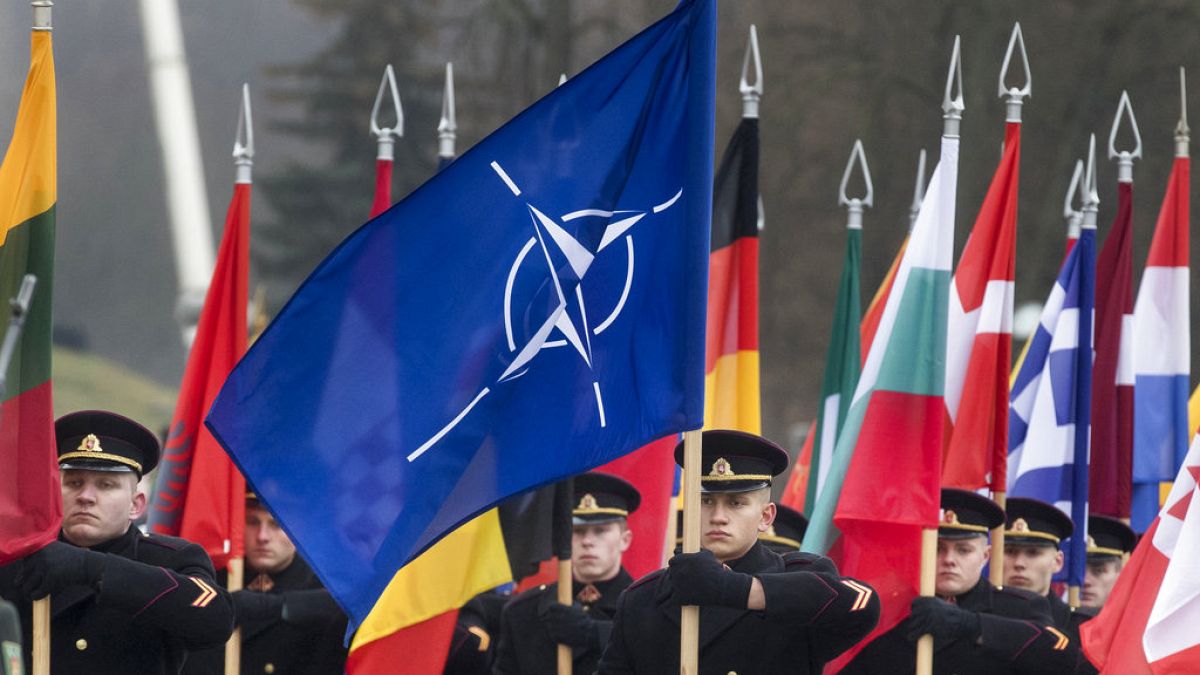
NATO has launched a new command centre to plan, coordinate, and arrange the delivery of security assistance for Ukraine.
Its location is the southern German town of Wiesbaden, known for spas and hot springs, which will now serve as a site of NATO’s efforts to support the Ukrainian military.

The command centre is located at a former US army base. It will organise training and equipment donations to Ukraine will be organised and be led by a 3-star general.
It’s the centrepiece of the NATO Security Assistance and Training for Ukraine plan which was announced as NATO alliance leaders met for an anniversary summit in Washington. The base will be comprised of approximately 700 personnel from NATO Allied nations and select partners.
NATO says the command centre in Germany will enhance its support of Ukraine but not make the alliance a party to the conflict.
A Ukrainian MP within President Zelensky’s party, who is also fighting in the military, said the centre is an extremely welcomed sign.
“We must certainly meet those people that have produced those munitions and try to train us» says Ukraine’s Servant of the People MP Sviatoslav Yurash explaining how training from NATO has been invaluable on the frontline.
NATO: Ukraine is on “an irreversible path” to membership
The centre was discussed at last week’s NATO summit in Washington when the alliance also declared that Ukraine was on an irreversible path to membership of the organisation.
One foreign policy expert cautioned that although positive, there were potentially limits to the extent the alliance would allow Ukraine to enter.
“It will hopefully inspire confidence in NATO’s support for Ukraine but at the same time, everyone knows including Ukrainian politicians that US domestic politics will decide Ukraine’s NATO membership,” said Leonard Schuette, senior researcher at Munich Security Conference.
Officials have warned that Ukraine could only enter the alliance once the war with Russia on its territory was over.
During the summit, the US also announced it would deploy long-range missiles in Germany.
When fully developed, these conventional long-range fire units will include SM-6, Tomahawk, and developmental hypersonic weapons, which have significantly longer ranges than current land-based ones in Europe.
«Germany must re-arm»
Green MP Sebastian Schaefer who sits on the parliamentary defence committee told Euronews that Germany should focus on re-arming itself:
“This is one of the realities of the 21st century. It’s not a very good thing to see, but it’s just necessary. It would be much wiser if we would live together in peace on this planet. But this is currently not the case so we need to prepare.”
Despite this, Germany’s defence minister Boris Pistorius has said that the ruling coalition approved less than a fifth of the increase he had asked for for its military.

